Typical Lifespan by Pump Type
The realistic local range is about 5 to 12 years. Single-speed motors tend to reach the lower part of that range, while variable-speed pumps reduce heat and wear by spending most operating hours at lower RPMs.
Phoenix Expert Pool Service sees pool pumps in the Phoenix area last about 5 to 12 years, with the exact lifespan depending on pump type, daily runtime, and maintenance. Desert heat, hard water, dust, and extended filtration schedules can accelerate wear on bearings, capacitors, impellers, and shaft seals. This guide explains realistic Arizona lifespans, seasonal runtime, failure signs, and when repair or replacement makes more sense.
The realistic local range is about 5 to 12 years. Single-speed motors tend to reach the lower part of that range, while variable-speed pumps reduce heat and wear by spending most operating hours at lower RPMs.
Extended summer schedules can push local pumps to 3,000 to 4,000 operating hours per year, compared with 1,500 to 2,000 hours in temperate climates. Direct sun, restricted flow, and incorrect pump sizing add still more thermal and mechanical stress.
A seal, capacitor, or bearing repair on a pump under 6 years old is often worth the typical $150 to $400 cost. A full motor failure on a pump over 8 years old usually makes replacement the more economical path.
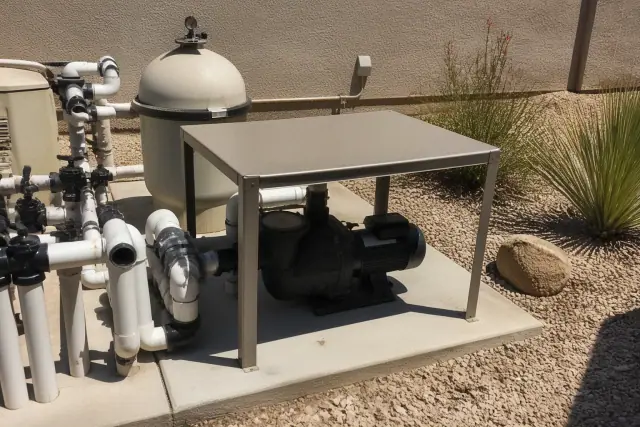
A pump with open airflow around the motor and shade that does not trap heat. Direct sun and poor clearance increase thermal stress and overload trips.
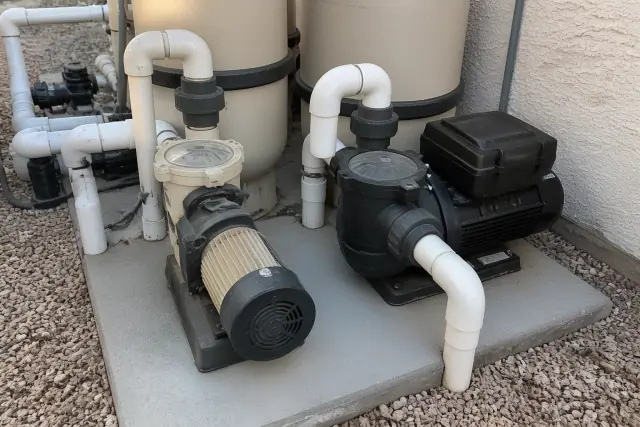
Compare a standard pump running at full speed with a programmed variable-speed unit operating at lower RPM. The setup helps explain why reduced motor speed can limit heat buildup and mechanical wear.
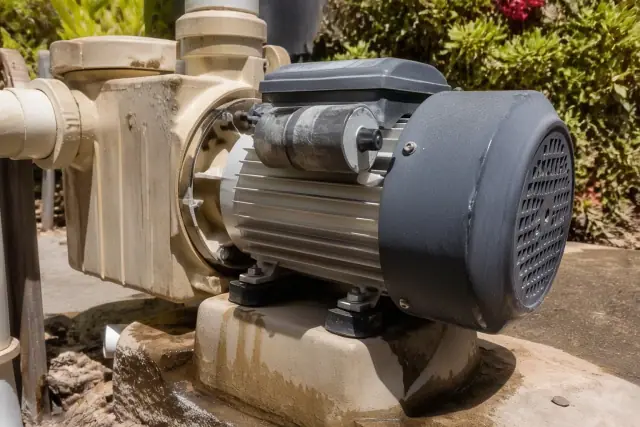
Water collecting at the pump base beside a clogged strainer basket and weak return flow. Those visible clues point to seal wear or a motor working against restricted circulation.
Factory-rated bearings, stainless-steel shafts, high-temperature seals, and NSF/ANSI 50-certified components support longer service. Budget pumps with plastic impellers may fail near 5 years, while well-maintained pumps with bronze or composite housings can reach 10 to 12 years.
From May through September, 10 to 12 hours daily is typical; in winter, 4 to 6 hours often works once water temperatures reach the 60s. The one-hour-per-10°F rule yields about 10 hours at 100°F, while freeze-protection cycles may still be needed below 35°F.
Single-speed replacement commonly falls around $500 to $800 installed. Variable-speed units may carry $600 to $1,200 purchase prices, but roughly $300 to $600 in annual electricity savings can recover the price difference in two to three years.
Check baskets weekly during monsoon season, lubricate dry O-rings every 3 to 6 months, and schedule an annual inspection. Consistent weekly service and seasonal maintenance can add 2 to 3 years to a pump's working life.
| Pump Condition | Cost or Age Signal | Practical Direction |
|---|---|---|
| Seal, capacitor, or bearing issue on a pump under 6 years old | $150-$400 repair range | Repair is often worth considering. |
| Motor-only failure | $250-$500 for motor replacement | Compare motor work with the full pump's age and condition. |
| Pump 7 or more years old with a second major repair | Repeated major repair | Replacement is usually more cost-effective. |
| Full motor failure on a pump over 8 years old | Repair can approach replacement cost | Replacement often makes more sense. |
| Full pump-and-motor assembly | $500-$2,000 installed | Price varies with horsepower and plumbing or electrical changes. |
Manufacturer motor ratings of 10 to 12 years generally assume moderate climates and average duty cycles, not Phoenix's near-daily 100°F-plus stretches from May through September. Local heat can degrade motor windings, bearings, capacitors, and shaft seals, while high-calcium water can promote scale around the housing and impeller. A pump near the low end of its expected range is not automatically finished, but age should be weighed with noise, leaks, flow, priming, breaker trips, and repair history.
Direct sun and restricted airflow raise motor temperature; monsoon sand and organic debris can clog strainer baskets and filters, making the pump work harder. Correct sizing based on pool gallonage and turnover rate matters because undersized pumps run under strain and oversized pumps waste energy and stress plumbing. Balanced water chemistry, shaded equipment, clean baskets, lubricated seals, and lower variable-speed RPMs all reduce avoidable wear. Daily use still matters: variable-speed pumps can run close to 24/7 at low RPM, while continuous full-speed operation adds unnecessary mechanical load.
How long should the pump run each day? In 105 to 110°F summer weather, use 10 to 12 hours as the normal starting range and split the schedule between morning and early evening when useful; winter often drops to 4 to 6 hours. How do you know it is failing? Grinding or screeching, water at the base, weak return jets, repeated breaker trips, humming without spinning, failure to prime, and rising energy use all warrant evaluation. Can you skip days? In Arizona heat, algae can begin taking hold within 24 to 48 hours, so daily filtration is the safer routine.
If your pump is noisy, leaking, losing flow, or repeatedly tripping a breaker, an on-site inspection can separate a seal or capacitor issue from a failing motor. Share the pump age, symptoms, and recent repair history so the recommendation can reflect the actual equipment and connections.