Proudly serving Phoenix, Scottsdale, Glendale, Mesa, Tempe, Chandler & surrounding areasCall or Text 24/7: 602-449-8063
Aerial view of a residential neighborhood with Saguaro cacti and stucco homes in Phoenix, AZ under a clear morning sky.

Pool Cleaning & Routine Debris Removal in Phoenix, AZ

Phoenix Expert Pool Service provides residential and commercial pool care throughout Phoenix and the Salt River Valley. Our core work includes weekly pool service, pool cleaning, chemical balancing, pool repair, equipment repair, pump repair, and filter cleaning. We also handle green pool cleanup, acid washing, and tile cleaning when routine maintenance is not enough. Service extends to Scottsdale, Tempe, Mesa, Chandler, Glendale, and Paradise Valley.

Phoenix sees more than 115 days a year above 100 degrees, so intense UV, evaporation, dust, and monsoon debris can disrupt pool chemistry quickly. We test with digital reagent methods, record every visit, and adjust treatment for pool volume, bather load, and plaster, pebble, fiberglass, or vinyl surfaces. Our technicians work from Certified Pool Operator training principles and ANSI/APSP-11 water clarity guidance, and the business carries the licensing and insurance appropriate for the pool work it performs. As a family-owned local operation, we typically keep the same technician on your route so subtle changes are easier to catch.

Every standard visit combines physical cleaning, chemical testing, and a visual equipment check. The goal is swim-ready water with the main drain clearly visible from the deck, plus a written or digital record of the readings from each stop.

Phoenix Expert Pool Service provides pool cleaning in Phoenix and nearby Scottsdale, Tempe, Mesa, Chandler, Glendale, and Paradise Valley.

★ ★ ★ ★ ★4.9/5 Average Rating · 20+ Years of Experience · Thousands of Customers Helped · Licensed & Insured · Residential & Commercial

Pool Cleaning Options & Benefits

What Professional Pool Cleaning Includes

Professional pool cleaning pairs physical debris removal with water testing and equipment observation. A standard visit starts by skimming the surface, brushing walls and steps, vacuuming the floor, and emptying the skimmer and pump baskets.

We test free chlorine, pH, total alkalinity, calcium hardness, cyanuric acid, and phosphates on site. Dosing is based on the pool's volume, bather load, and surface rather than a flat treatment for every property.

The pump, filter, heater, and salt cell or chlorinator are visually checked for leaks, unusual noise, wear, and reduced flow. Catching a worn seal, cracked lid gasket, or obstructed circulation during routine service can prevent a larger repair.

Benefits of Consistent Weekly Service

Consistent care keeps debris, algae film, chemistry drift, and equipment strain from building between visits. In Phoenix, that routine matters because heat, hard water, UV exposure, and monsoon debris keep affecting a pool even when it is not being used.

  • Swim-ready water maintained across the week
  • Brushing before biofilm anchors to plaster and tile
  • Written or digital chemistry readings from every visit
  • Chemical dosing calibrated to pool volume and bather load
  • Clear baskets that protect pump flow
  • Earlier detection of filter and circulation changes
  • Care matched to plaster, pebble, fiberglass, or vinyl surfaces
  • Ongoing maintenance for pools used 10-12 months a year
Complete Pool Care

Phoenix Pool Cleaning Services

From weekly cleaning to restoration and equipment troubleshooting, each service addresses a specific part of keeping Phoenix water clear and circulation reliable. We can maintain an active pool, correct a chemistry problem, or diagnose repair symptoms before recommending replacement.

Weekly Pool Service

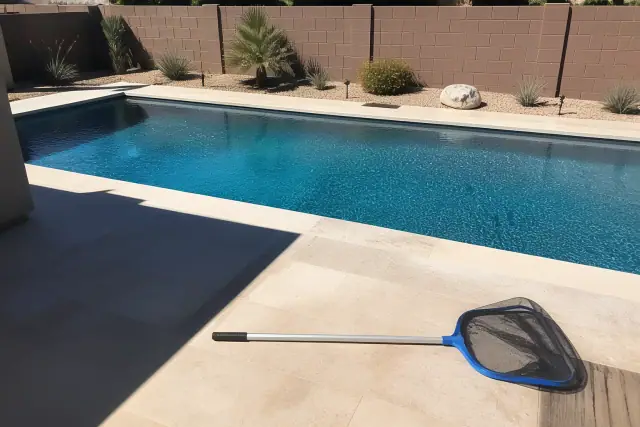
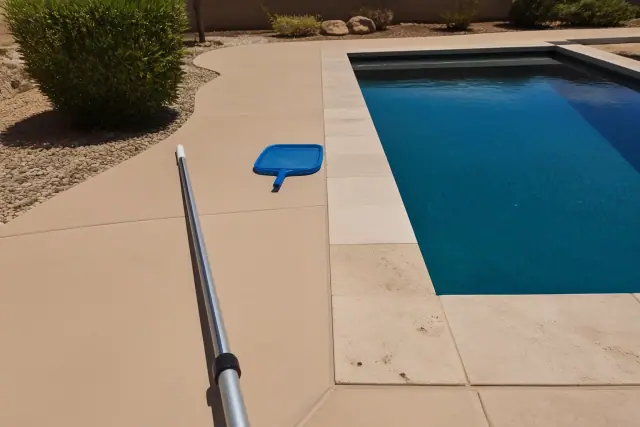
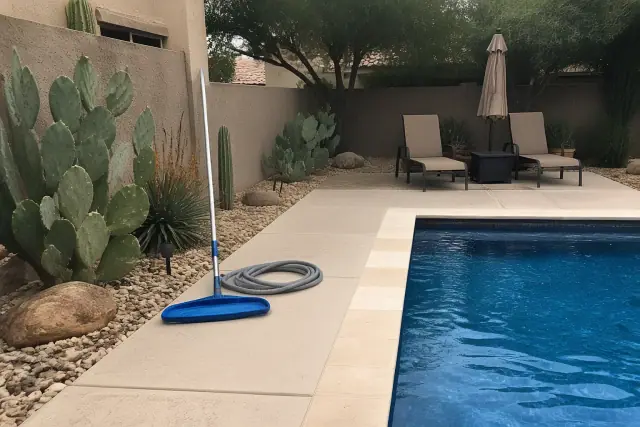
A telescoping pole and leaf net resting on a pool deck during weekly pool service in a backyard in Phoenix, AZ.

Surface skimming, wall and step brushing, floor vacuuming, basket emptying, water testing, chemical adjustment, and equipment observation are combined in one recurring visit. Weekly care is the recommended cadence for most residential pools in Phoenix's summer conditions.

Request Estimate

Pool Chemical Service

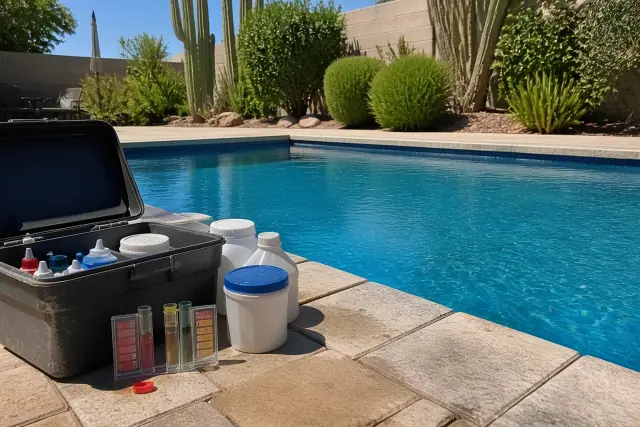
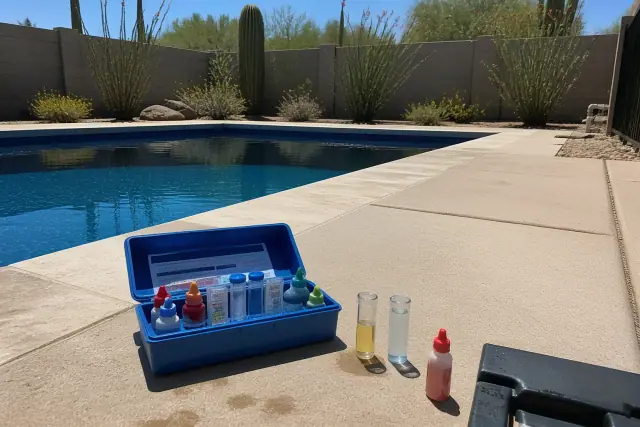
Pool chemical testing kit by a rectangular swimming pool on a sunny day in Phoenix, AZ.

We manage free chlorine, pH, total alkalinity, calcium hardness, cyanuric acid, and phosphate load in the order each pool needs. Stabilizer and bather load are considered so chlorine is protected from UV without simply overdosing product.

Request Estimate

Pool Filter Cleaning

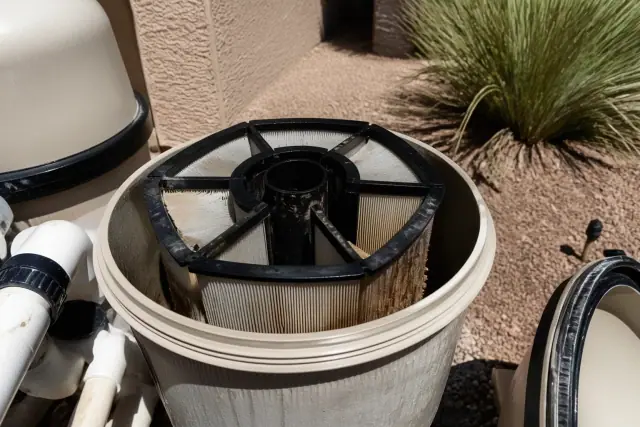
Pool filter grids inside an open housing during maintenance in Phoenix, AZ.

Cartridge, DE, and sand filters have different cleaning needs, so we use the pressure gauge and the filter's clean baseline to judge flow restriction. Cleaning at the right time reduces pump strain and keeps fine debris from recirculating.

Request Estimate

Pool Pump and Equipment Repair

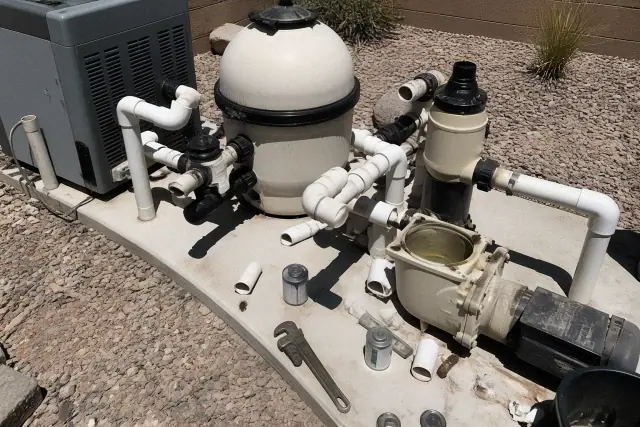
Pool pump equipment repair on a concrete slab in a xeriscaped Phoenix, AZ backyard.

Cycling, humming, seal-plate leaks, unusual noise, and weak circulation can point to a failed capacitor, worn bearing, dried seal, clogged impeller, stuck valve, or damaged gasket. We diagnose the cause before recommending parts or replacement.

Request Estimate

Green Pool Cleanup

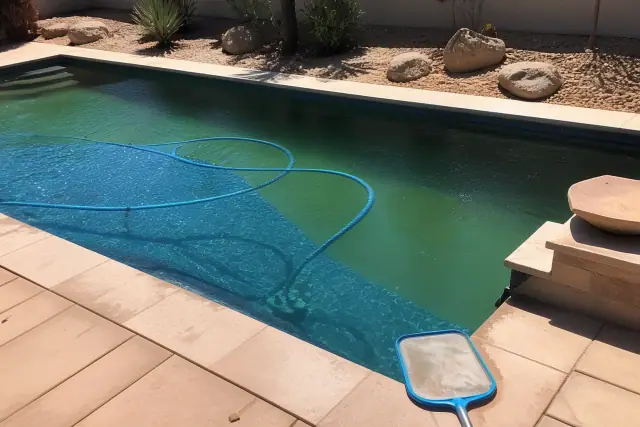
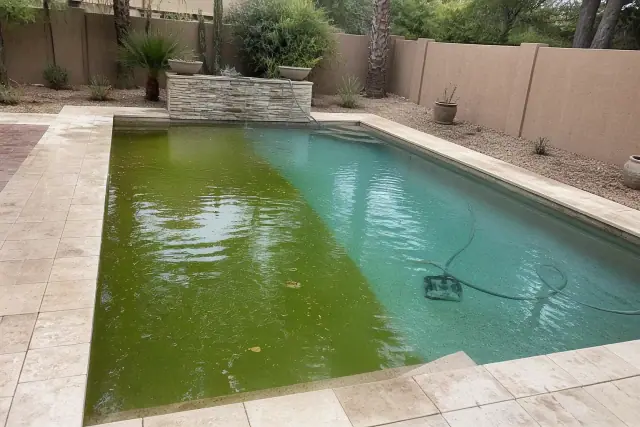
Partially cleaned green swimming pool with a vacuum hose and skimmer net in a Phoenix, AZ backyard.

Green-to-clean service begins with water testing and a shock treatment matched to actual chlorine demand. Repeated brushing, continuous filtration, and daily retesting continue until chemistry stabilizes and the water clears.

Request Estimate

Acid Wash and Pool Tile Cleaning

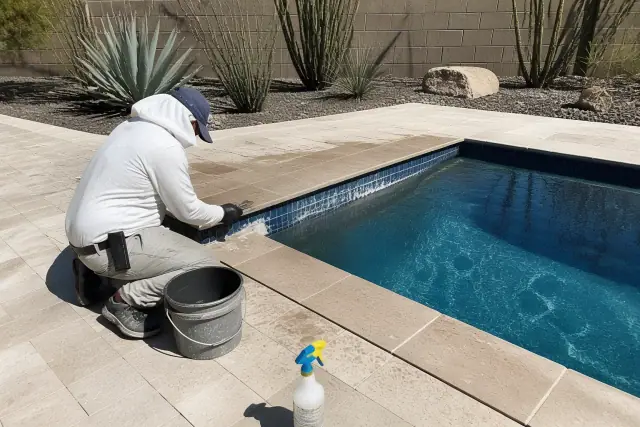
Acid wash and pool tile cleaning in progress at a residential pool in Phoenix, AZ.

Acid washing is reserved for calcium deposits, algae staining, or mineral discoloration that has penetrated plaster and will not respond to standard cleaning. Waterline tile can be treated with pumice, specialized cleaners, or controlled acid application when the surface and buildup call for it.

Request Estimate
Maintenance and Restoration Options

Pool Care for Different Needs

Pool condition, surface type, use pattern, and equipment symptoms determine whether a property needs recurring maintenance, chemistry-only care, repair, or a one-time restoration. These options show how a pool-cleaning plan can be adjusted without turning every issue into the same treatment.

A telescopic pole and skimmer net beside a residential swimming pool during weekly maintenance in Phoenix, AZ.

Complete Weekly Maintenance

A complete weekly visit keeps physical cleaning, chemistry, and observation on the same schedule, helping prevent small changes from compounding between stops.

  • Skim leaves, dust, and floating debris from the surface
  • Brush walls, steps, corners, plaster, and tile
  • Vacuum settled debris from the pool floor
  • Empty skimmer and pump baskets to protect flow
  • Record chemistry readings and observations after the visit
Request Estimate
Pool water test kit on a stone deck beside a backyard swimming pool in Phoenix, AZ.

Water Chemistry Management

Arizona sun can lower chlorine quickly while evaporation concentrates dissolved solids, so the readings must be treated as a connected system. Alkalinity is adjusted before pH, and stabilizer is balanced so chlorine remains effective.

  • Maintain free chlorine between 1-3 ppm
  • Keep pH between 7.2-7.8
  • Hold total alkalinity between 80-120 ppm
  • Manage cyanuric acid between 30-50 ppm
  • Treat phosphate load when readings rise above roughly 100 ppb
Request Estimate
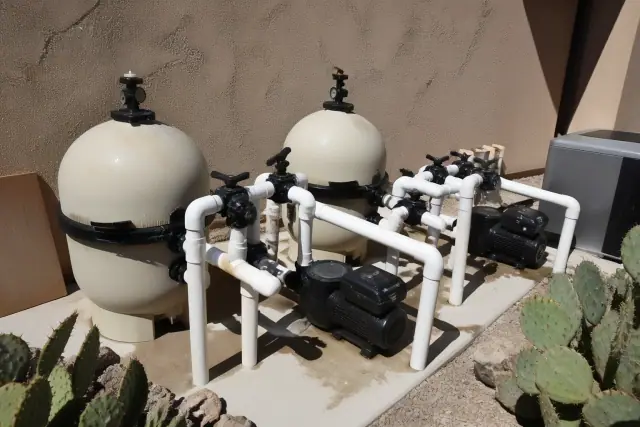
Pool equipment, including tanks and pumps, at a home in Phoenix, AZ, with desert landscaping in the background.

Desert Equipment Care

Dust, hard water, and UV exposure accelerate scale and wear on seals, o-rings, cartridges, housings, and wiring insulation. Regular observation helps separate simple flow restrictions from true component failure.

  • Clean or backwash when filter pressure reaches 8-10 psi over baseline
  • Flush pool lines periodically to clear mineral buildup
  • Inspect salt cells for fast-forming calcium scale
  • Check equipment pads for sun-damaged housings and wiring
  • Watch pumps, heaters, automation controllers, and valves for wear
Request Estimate
Green-to-clean pool restoration showing murky water and debris in a Phoenix, AZ backyard with desert landscaping.

Green-to-Clean Restoration

A clear pool can turn green within 72 hours in Phoenix summer heat when a vacation, broken pump, or interrupted chlorine service lets demand exceed supply. Restoration is scaled to the actual water condition and surface staining.

  • Test the water to determine cleanup severity
  • Size shock treatment to actual chlorine demand
  • Brush every surface repeatedly to break up attached algae
  • Run filtration continuously and retest daily until stable
  • Evaluate severe staining before any drain-and-acid-wash step
Request Estimate
A clean backyard swimming pool with xeriscape landscaping and cactus in Phoenix, AZ.

Service Plans and Pricing

Weekly, biweekly, monthly, chemical-only, one-time cleaning, and standalone green-pool cleanup options are described in the source. Flat-fee pricing is itemized before work and varies with pool size, surface type, condition, and chemical inclusion.

  • Weekly Valley service generally runs $80 to $150 per month
  • Reliable weekly Phoenix service commonly lands in the $115-140 monthly range
  • Chemical-only service typically starts lower, around $48-60 per month
  • A first-time cleaning for a neglected pool typically runs $150-350
  • Annual care generally runs $1,500-2,400 for concrete or plaster and $1,000-1,500 for fiberglass
Request Estimate
Match Service to Pool Condition

Choosing the Right Pool Care Approach

Choose weekly cleaning for continuing physical care and chemistry control, chemical-only service when physical cleaning is already covered, repair when circulation or components are failing, and restoration when algae or staining has taken hold. The source cites industry data associating pools in good condition with a 7-15% increase in Arizona home value, making condition and service fit important beyond appearance.

Digital Water Testing and Visit Logs

Digital reagent methods provide specific readings instead of a visual guess from a color strip. A written or digital log preserves the chemistry history so changes in chlorine demand, stabilizer, hardness, or phosphates can be tracked over time.

Consistent Local Technicians

Phoenix Expert Pool Service is a family-owned local operation, and the same technician typically stays with a pool from week to week. That continuity makes unusual noise, changing pressure, leaks, and surface changes easier to notice early.

Surface-Specific Pool Care

Treatment is calibrated for plaster, pebble, fiberglass, or vinyl rather than assuming every finish responds the same way. Surface type influences chemical dosing, brushing, stain evaluation, and whether a deep treatment such as an acid wash is appropriate.

What Sets Our Pool Care Apart

Why Choose Us for Phoenix Pool Cleaning?

Our approach joins recurring cleaning with documented water testing, equipment observation, and clear repair diagnosis. Technicians work from Certified Pool Operator training principles and ANSI/APSP-11 clarity guidance, while licensing and insurance support the repair and chemical work described by the business.

Request Pool Service

Rapid Chlorine Loss

Direct sun can burn off unprotected chlorine within hours, especially when cyanuric acid is too low. If chlorine demand keeps outrunning supply, algae gets the opening it needs even when the water looked balanced recently.

Cloudy or Green Water

Cloudiness, visible algae in steps or corners, or a green tint returning within 48 hours of treatment can indicate that maintenance is not keeping pace. The cause may be high organic load, phosphate load, weak circulation, or filtration trouble rather than a simple dosing mistake.

High Filter Pressure

Restricted filters reduce flow, force the pump to work harder, and let fine debris recirculate. The source notes that U.S. pool owners spend an average of $3,000 to $6,000 annually on maintenance and repairs, with neglect tending to push households toward the higher end.

Pump Leaks, Humming, or Cycling

A pump that cycles, hums without spinning, leaks at the seal plate, or loses flow may have a failed capacitor, worn bearing, dried seal, or clogged impeller. Diagnosing the exact symptom helps avoid replacing a motor when a valve, gasket, or blockage is the real problem.

Calcium Scale and Tile Buildup

An uncovered Phoenix pool can lose roughly a quarter inch or more of water per day in summer, concentrating dissolved solids as evaporation continues. Hard water then leaves scale on salt cells and waterline tile, where standard cleaners may not be enough.

Algae Stains and Surface Etching

Algae film that is not brushed away can anchor to plaster and tile, leading to discoloration and surface damage. If staining penetrates the plaster, routine brushing and chemical correction may no longer restore the finish, so the surface must be evaluated for acid washing.

How Weekly Service Works

Our Pool Cleaning Process

Each visit follows a repeatable sequence that addresses water chemistry, visible debris, pool surfaces, circulation, and equipment condition. The order creates a useful record and helps the technician identify what changed since the previous stop.

01.

Test and Record Water Chemistry

Test free chlorine, pH, total alkalinity, calcium hardness, cyanuric acid, and phosphates before adjusting treatment. Record the readings so the pool's chemistry history is available for comparison.

02.

Skim the Surface and Clear Debris

Remove leaves, dust, insects, and monsoon debris from the surface before they sink or add to the organic load. Clearing floating debris also makes the remaining water condition easier to assess.

03.

Brush Walls, Steps, and Corners

Brush plaster, pebble, fiberglass, vinyl, tile, steps, and shaded corners as appropriate for the surface. This breaks up algae film before it anchors and prepares settled material for filtration or vacuuming.

04.

Vacuum the Pool Floor

Vacuum dust and settled debris from the floor after brushing has loosened buildup. Extra vacuuming may be needed during monsoon cleanup or a first-time visit to a neglected pool.

05.

Empty Baskets and Check Flow

Empty skimmer and pump baskets so a clog does not starve the pump of water or trip a breaker. Compare filter pressure with the clean baseline and note any sign of restricted circulation.

06.

Inspect Equipment and Adjust Treatment

Visually inspect the pump, filter, heater, salt cell or chlorinator, valves, and equipment pad for leaks, noise, wear, scale, or sun damage. Adjust chemicals to the measured readings, pool volume, bather load, and surface type.

Clear Water Starts Here

Schedule Professional
Pool Cleaning

Tell us whether you need recurring cleaning, chemistry help, equipment diagnosis, green-pool restoration, or surface cleaning. We can match the visit to the pool's condition and explain the recommended work before service begins.

Pool Cleaning Help

Phoenix Pool Cleaning FAQs

These answers cover service frequency, pricing, cleaning steps, chemistry targets, equipment signals, and restoration options for Phoenix pools.

Call About Pool Service

Regular weekly or biweekly service across the Phoenix Valley generally runs $80 to $150 per month, with reliable weekly service commonly landing between $115 and $140 monthly. Pool size, surface type, attached spas, saltwater equipment, and whether chemicals are included can change the price.

Weekly service is the standard recommendation for most Arizona residential pools because intense sun and heat can push chemistry out of range quickly. Biweekly service may work for lightly used pools during cooler months, while commercial or heavily used pools may need more frequent attention.

A standard visit includes surface skimming, wall and step brushing, floor vacuuming, basket emptying, filter-pressure observation, water testing, chemical adjustment, and a visual equipment check. The readings and observations are documented after the visit.

The source recommends free chlorine at 1-3 ppm, pH at 7.2-7.8, total alkalinity at 80-120 ppm, and cyanuric acid at 30-50 ppm. Treatment still needs to account for pool volume, bather load, surface type, calcium hardness, and phosphate load.

A pressure reading 8-10 psi above the filter's clean baseline is the practical signal to clean or backwash, regardless of whether the filter is cartridge, DE, or sand. Waiting longer restricts flow and makes the pump work harder.

A pool turns green when chlorine demand exceeds supply and algae begins multiplying. Direct sun, low stabilizer, a broken pump, or interrupted chemical service can turn clear water green within 72 hours during Phoenix summer heat.

Cleanup starts with testing to determine severity, followed by shock treatment sized to actual chlorine demand. The pool is brushed repeatedly, filtration runs continuously, and the water is retested daily until chemistry stabilizes; severe staining may require a separate drain-and-acid-wash evaluation.

An acid wash is considered when calcium deposits, algae staining, or mineral discoloration has penetrated plaster and will not respond to brushing or standard chemical treatment. Because repeated acid washing thins plaster, the surface should be evaluated before the pool is drained.

Yes, the source describes pumice stones, specialized tile cleaners, and controlled acid application for stubborn scale. The method depends on the tile, grout, glaze, and severity so the buildup can be removed without unnecessary surface damage.

Cycling on and off, humming without spinning, leaking at the seal plate, unusual noise, and weak flow can signal a failed capacitor, worn bearing, dried seal, clogged impeller, stuck valve, or damaged gasket. Diagnosis should come before parts replacement.

Yes. Salt cells need regular inspection because calcium scale forms faster in Phoenix's hard water, and the pool still needs physical cleaning, chemistry testing, circulation checks, and stabilizer management.

Many Phoenix homeowners operate their pools 10-12 months a year instead of closing them. Summer heat, monsoon debris, winter use, and continuing chemistry changes make a consistent maintenance schedule useful across the seasons.

The source says technicians work from Certified Pool Operator training principles and use ANSI/APSP-11 water clarity guidance. Arizona does not require a specific state license only to clean a residential pool, but repair, equipment-installation, and structural work may require licensing through the Arizona Registrar of Contractors, and public or commercial pools have additional oversight.