Pressure Climbs 8-10 PSI
Compare the current gauge reading with the clean baseline recorded immediately after cleaning or backwashing. A rise of 8-10 PSI is the most objective signal that debris is restricting the media.
Phoenix Expert Pool Service checks filtration systems on residential and commercial pools across the Salt River Valley every week, and the clearest cleaning trigger is a pressure reading 8-10 PSI above the filter's clean start-up baseline. Phoenix heat, monsoon dust, and mineral content in municipal water can load media quickly, so pair the gauge reading with cloudy water, weak return jets, or slowing circulation.
Compare the current gauge reading with the clean baseline recorded immediately after cleaning or backwashing. A rise of 8-10 PSI is the most objective signal that debris is restricting the media.
Weak return jets, sluggish skimmers, or cloudy water despite balanced chemistry show that packed media may be reducing circulation and letting fine particles recirculate.
Cartridge, sand, and diatomaceous earth filters use different rinse, backwash, and teardown routines, so confirm the filter type before choosing the cleaning method.
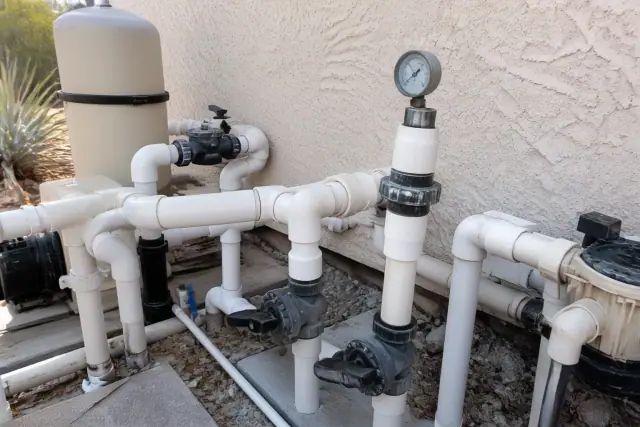
The current gauge reading beside a clearly marked clean start-up PSI so the pressure rise is easy to compare.
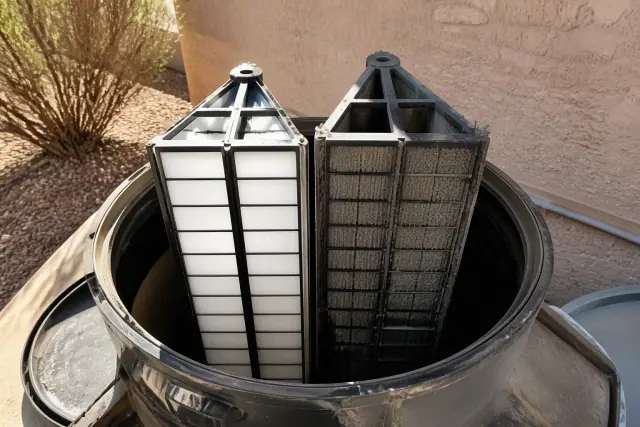
Compare open cartridge pleats or clean grids with media packed by fine dust, pollen, oils, and scale to show why flow drops.
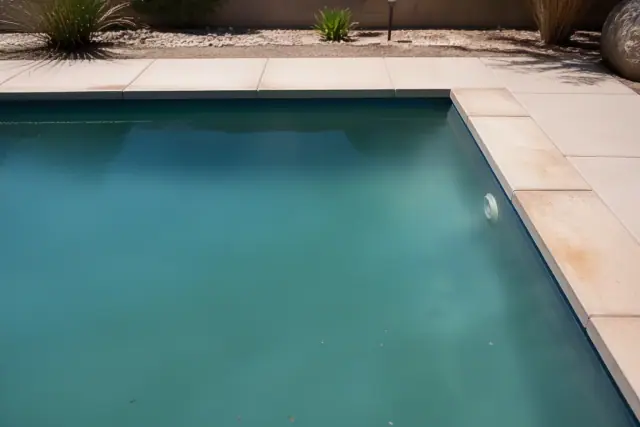
A weak, dribbling return beside hazy water because those performance changes confirm what a rising gauge suggests.
Record the clean pressure immediately after a cleaning or backwash. Marking it on the filter housing creates a reliable reference for every later check.
Most Phoenix-area residential pools need 4-8 cartridge cleanings, about 6-10 sand backwashes, or 8-12 DE backwashes plus 2-4 full teardowns per year. Heavy bather loads, nearby landscaping, and construction dust push a pool toward the higher end.
Cartridge elements generally last 5-7 years, sand media 7-10 years, and DE grids or cartridge cores 3-5 years with consistent care. Compressed or torn pleats, brittle end caps, sand in the returns, or pressure that rebounds within days point toward replacement.
Empty the pump basket weekly and check it before blaming the filter for weak flow. A sudden pressure spike can also indicate a clogged skimmer basket, closed valve, or failing pump impeller rather than gradual media buildup.
| Filter type | When to clean | Cleaning method |
|---|---|---|
| Cartridge | About 8 PSI over the clean baseline; typically every 2-6 weeks in Phoenix swim season. | Remove the element, rinse between pleats from top to bottom, soak for oils or scale when needed, then rinse again. |
| Sand | About 10 PSI over baseline; typically every 4-6 weeks with monthly backwashing. | Backwash for two to three minutes, or until the sight glass runs clear. |
| DE | About 8 PSI over baseline; backwash monthly and perform a full teardown every 1-2 months. | Backwash, inspect and clean the grids, then recoat with fresh DE powder for the grid capacity. |
Debris, sunscreen oils, pollen, and fine monsoon dust raise resistance as they pack into filter media. Rising pressure shows that restriction, while cloudy water and slower returns show its effect on the pool. Skipping cleaning also makes the pump work harder and reduces how evenly chlorine circulates. In Phoenix summer heat, algae spores and organic debris can recirculate and turn the water green within days.
Phoenix heat, monsoon storms, palm debris, heavy swimming, landscaping, and nearby construction can shorten the interval between cleanings. Saltwater pools use the same PSI rule as chlorine pools, although dissolved minerals may build scale on cartridge pleats faster. A dedicated cleaning solution helps dissolve oils, scale, and calcium deposits that a hose alone may leave behind in Maricopa County's hard-water conditions.
How much does professional filter cleaning cost? In the Phoenix area, it typically runs $75-$130 per filter depending on type, size, and buildup, with DE and multi-filter commercial systems at the higher end. Can you clean a filter yourself? Homeowners can hose cartridges and backwash sand or DE filters, but system pressure must be relieved before opening a housing, and full teardowns or chemical soaks require care around pleats and grids. Does the pool shell change the trigger? No; fiberglass, vinyl, and gunite pools all use pressure and visible debris rather than shell material to determine cleaning time.
Phoenix Expert Pool Service provides filter cleaning across Phoenix, from Ahwatukee to Deer Valley, as a standalone visit or within weekly pool service. Each visit includes a pressure-gauge check, media inspection, and circulation-system check of the pump and plumbing.