Algae Treatment and Removal
Technicians remove leaves and debris, apply concentrated chlorine shock, brush walls, steps, and corners, then vacuum settled material to waste so it does not recirculate.
Phoenix Expert Pool Service uses a documented green-to-clean process for residential and commercial pools across the Salt River Valley. The service removes debris and algae, restores filtration, and rebalances the water so a swampy green pool can return to a clear, stable condition.
Technicians remove leaves and debris, apply concentrated chlorine shock, brush walls, steps, and corners, then vacuum settled material to waste so it does not recirculate.
Cartridge, DE, or sand filters are cleaned as needed, a clarifier may help capture fine particles, and the water is tested and adjusted before the cleanup is considered finished.
Water is retested every 24 hours while daily brushing and continuous filtration continue. Clear appearance alone is not enough; the chemical readings also need to stabilize.
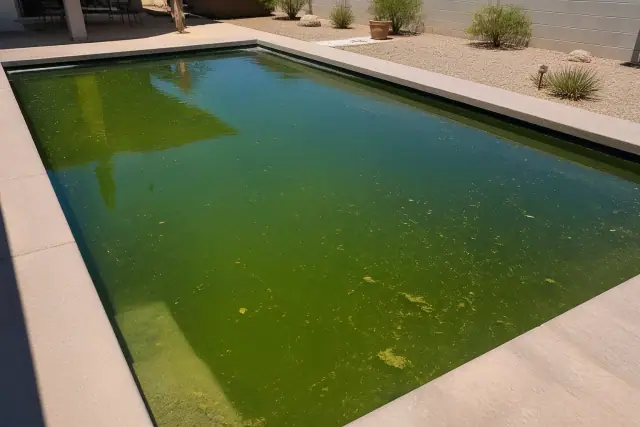
Visible leaves, dust, and organic debris reveal how much material must be removed before chemical treatment can work efficiently. The starting condition helps explain the cleanup scope.
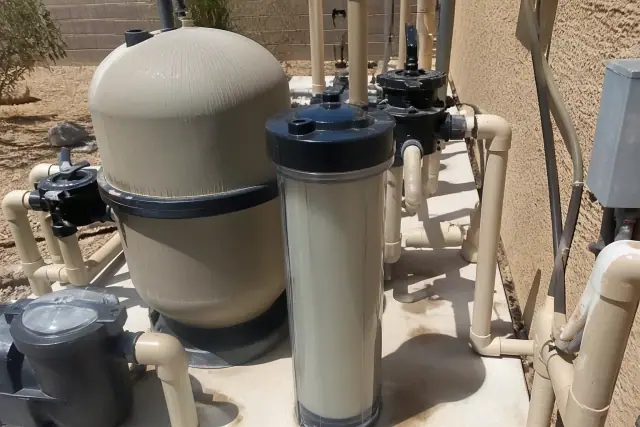
After algae is killed, the water often turns cloudy because fine dead material remains suspended. Filtration and clarifier move the pool from this stage toward clear visibility.
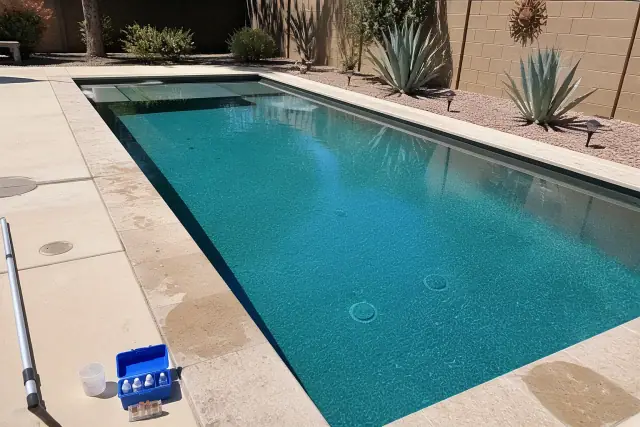
Clear water, visible pool surfaces, and normal circulation indicate visual recovery after final testing and balancing. Functioning equipment helps maintain the result.
Inspection, debris removal, water testing, shock treatment, daily brushing, vacuuming to waste, filter cleaning, clarifying, and final chemical balancing form the full sequence.
A standard residential pool may receive a full gallon of concentrated liquid chlorine per shock treatment, followed by continuous pump operation for 24 hours to circulate sanitizer through the plumbing.
Before the pool is called clean, pH should settle between 7.4 and 7.6, total alkalinity between 80 and 120 ppm, and chlorine should hold at 1-3 ppm.
Weekly service after cleanup starts around $85 a month for most Phoenix-area residential pools and includes skimming, brushing, vacuuming, basket cleaning, chemical dosing, and a visual equipment check.
| Pool Condition | Service Focus | Expected Recovery |
|---|---|---|
| Lightly green, equipment working | Shock, brushing, vacuuming, and continuous filtration | A 24-hour result may be possible, but is not assured |
| Standard green pool | Debris removal, algae treatment, filter cleaning, and balancing | Typically 3-5 days |
| Heavy algae or long neglect | Repeated cleaning, extended filtration, and stain assessment | Up to a week or longer |
Green-to-clean service treats more than the visible color. Chlorine kills algae, brushing frees it from plaster or pebble surfaces, vacuuming removes settled debris, and a cleaned filter captures dead material; if fine particles keep the water cloudy, clarifier helps them form clusters the filter can catch.
Light algae can clear faster when the pump and filter work correctly, while thick algae mats, weeks of neglect, organic debris, staining, or equipment failure extend recovery. Phoenix summer water temperatures routinely rise above 90°F, accelerating algae growth and chlorine loss, and an overloaded filter may need cleaning twice during one cleanup.
Can a homeowner handle the treatment, how much algae-breakdown product is needed, and how can another bloom be prevented? A lightly green pool with working equipment may be manageable with accurate testing, correct dosing, daily brushing, and vacuuming; one treatment described for this process is dosed at roughly 2 pounds per 15,000 gallons, so pool volume and product directions matter. After recovery, the 3 C's-circulation, cleaning, and chemistry-remain essential, with summer pump operation typically running 8 to 12 hours in Phoenix.
Share the pool's size, current color, debris level, and equipment condition to get a clear scope for green pool cleanup in the Phoenix metro area before work starts.