Installed Cost Range
Most Phoenix homeowners pay $700 to $2,500 installed. A mid-range single-speed or two-speed replacement commonly centers near $1,300.
At Phoenix Expert Pool Service, we find that most Phoenix homeowners pay $700 to $2,500 for an installed pool pump replacement, with $1,300 a common midpoint for a mid-range single-speed or two-speed pump. Pump type, horsepower, and the fit of the existing plumbing and electrical setup determine where a particular project lands within that range.
Most Phoenix homeowners pay $700 to $2,500 installed. A mid-range single-speed or two-speed replacement commonly centers near $1,300.
Pump type, horsepower, plumbing size, pool gallonage, electrical setup, and any needed union or check-valve work shape the final quote.
Compare the pump's age, housing condition, electrical fault, and repair estimate. Repair is more attractive on a younger pump with one failed part; age and major damage favor replacement.
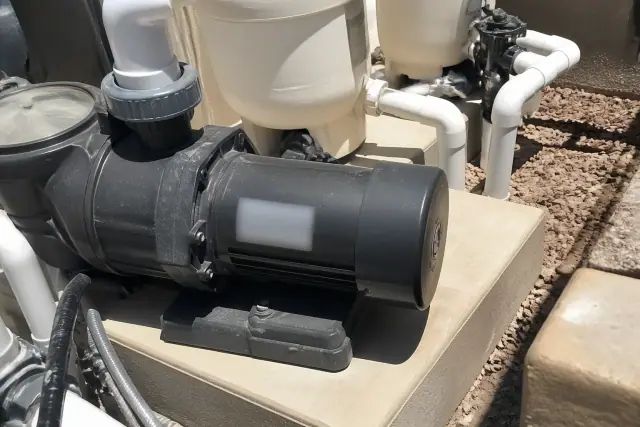
The current pump label, horsepower, plumbing layout, and ventilation around the equipment pad. These details reveal whether a replacement can be a direct swap.
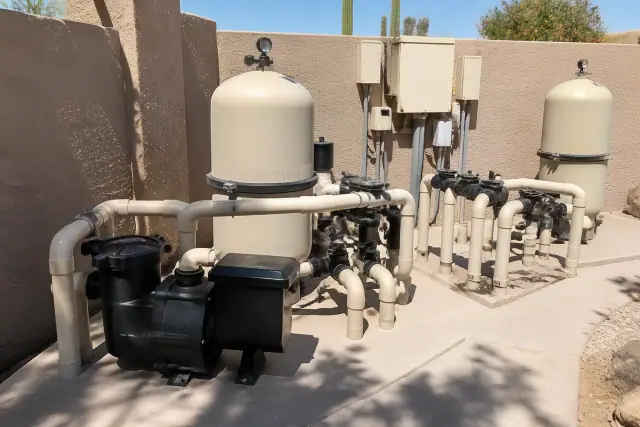
Compare the three pump types side by side, including controls and speed settings. Upfront equipment cost and long-term electricity use differ substantially.
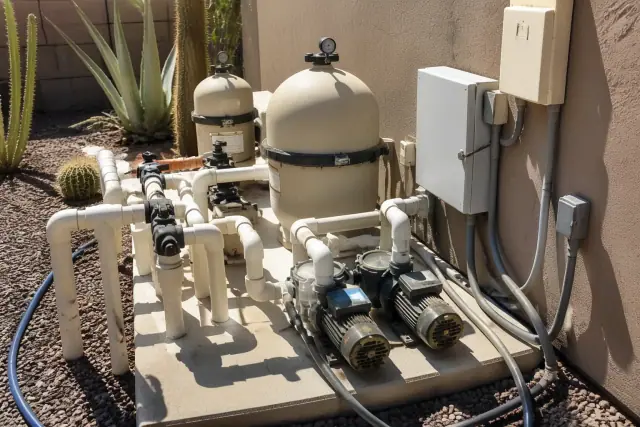
Unions, check valves, the disconnect, GFCI protection, and bonding connections. Corrosion or a mismatched layout can turn a simple swap into a more involved installation.
Residential pool pump replacement in Phoenix averages $900 to $2,200 installed, depending on pump size and the equipment-pad configuration.
HOA and apartment-community pool replacements often cost $2,000 to $4,500 because of higher flow needs and safety-vacuum-release requirements. Large custom pools with attached spas or water features can also require more capable variable speed equipment.
A direct residential swap normally takes 1.5 to 2 hours. Plumbing changes, a new variable speed controller, or corroded unions and fittings extend the job.
A motor replacement can cost $400 to $600, and a repair above 50% of a new installed pump's price often favors replacement. Humming without turning, a cracked housing, rising energy use, or an electrical fault on a pump past 8 years strengthens that case.
| Pump Type | Equipment Cost | Installed Cost in Phoenix |
|---|---|---|
| Single-speed | $150 to $500 | $700 to $1,200 |
| Two-speed | $300 to $800 | $900 to $1,600 |
| Variable speed | $600 to $1,800 | $1,200 to $2,500 |
| Commercial-grade | $1,000 to $3,000+ | $2,000 to $4,500+ |
Nationally, pool pump replacement runs $700 to $4,000 installed, with about $1,300 a common total for the unit and installation. A pump alone may range from $150 for a small single-speed unit to $1,800 or more for a high-end variable speed model, while simpler above-ground replacements often cost $400 to $900 installed. Pricing remained relatively steady through 2024 and 2025 heading into 2026, apart from normal material and freight fluctuations.
Horsepower must match the pool's gallonage and plumbing, while saltwater systems also need pump flow compatible with the salt cell; once sizing is correct, fiberglass and concrete shells cost about the same to serve. Phoenix hard water from Central Arizona Project and Salt River Project sources can accelerate seal wear, and weeks above 110 degrees can shorten motor life on a poorly ventilated pad. Arizona energy rules require variable speed or two-speed pumps for most residential replacements, consistent with federal dedicated-purpose pool pump standards in effect since 2021; variable speed equipment can recover its higher upfront price through lower electricity use in about 2 to 4 years. Installation should also include checks of the disconnect, GFCI protection, and bonding connections under National Electrical Code Article 680.
How is a pump sized? A 15,000- to 20,000-gallon residential pool typically needs 1 to 1.5 horsepower to turn its water over in 8 to 10 hours, while larger pools or water features may need 2 horsepower or adjustable variable speed flow. When is repair worthwhile? A pump under 5 years old with one failed seal, bearing, or capacitor is often a good repair candidate; pumps generally last 8 to 12 years, but Phoenix heat and hard water can shorten an unshaded unit's life to 6 to 8 years. Is a permit required? A standard replacement on existing plumbing generally does not require one, but rerouted plumbing, an electrical-service upgrade, or regulated commercial equipment may change that. Can a failed pump turn the water green? Algae can take hold within a few days when circulation stops, especially when Phoenix summer pool water reaches 85 to 90 degrees, so cleanup and chemical rebalancing may be needed after circulation returns.
Share the pump type, horsepower, pool gallonage, and symptoms you have noticed so the equipment pad and replacement scope can be checked. Straightforward replacements are often completed the same day, and urgent service is available when a dead pump threatens water quality in Phoenix heat.